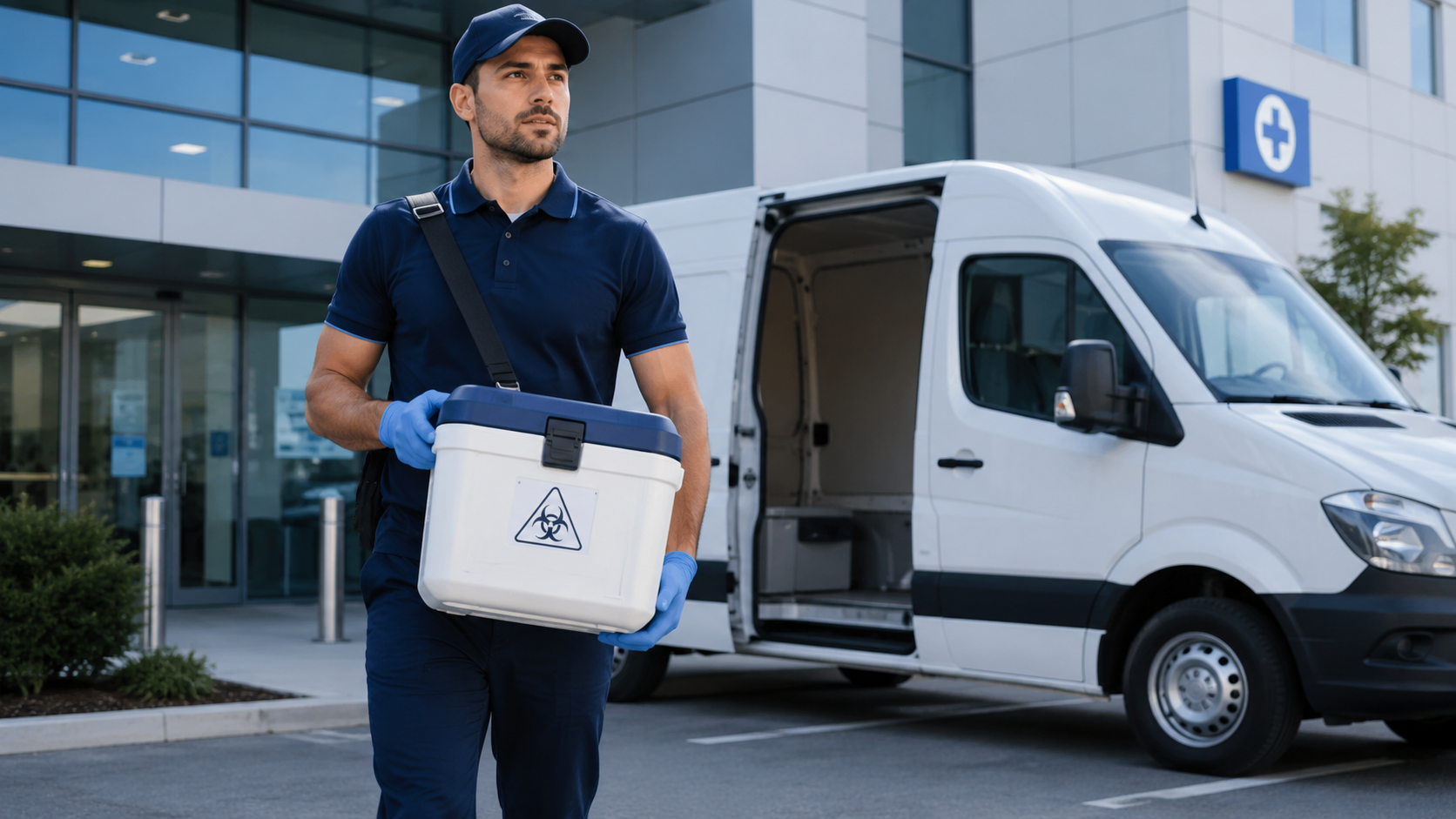
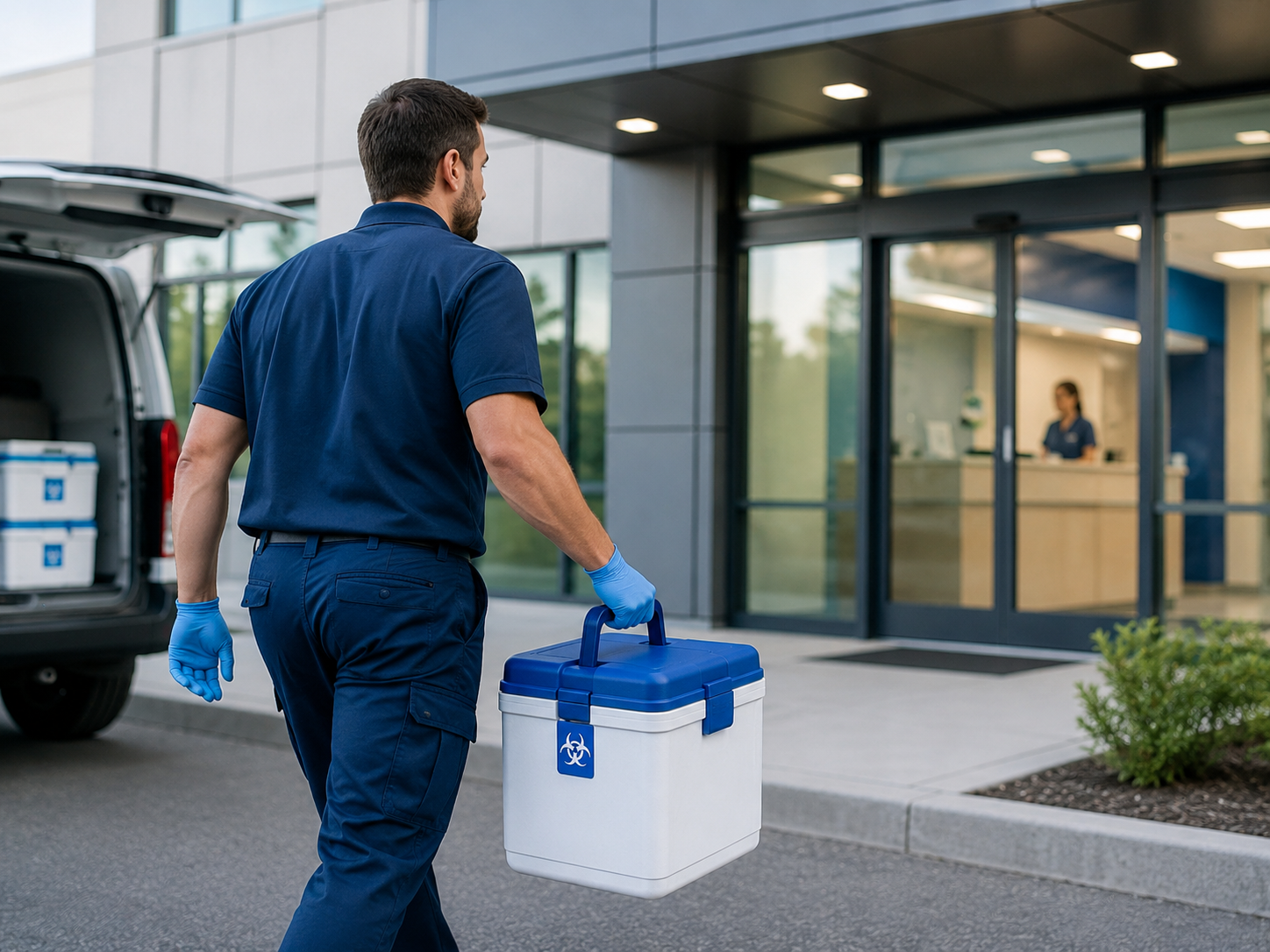
Real-World Exposure Scenarios
Learn how to recognize and respond to situations involving blood, bodily fluids, leaking specimens, contaminated packaging, spills, and possible exposure incidents during medical courier work.
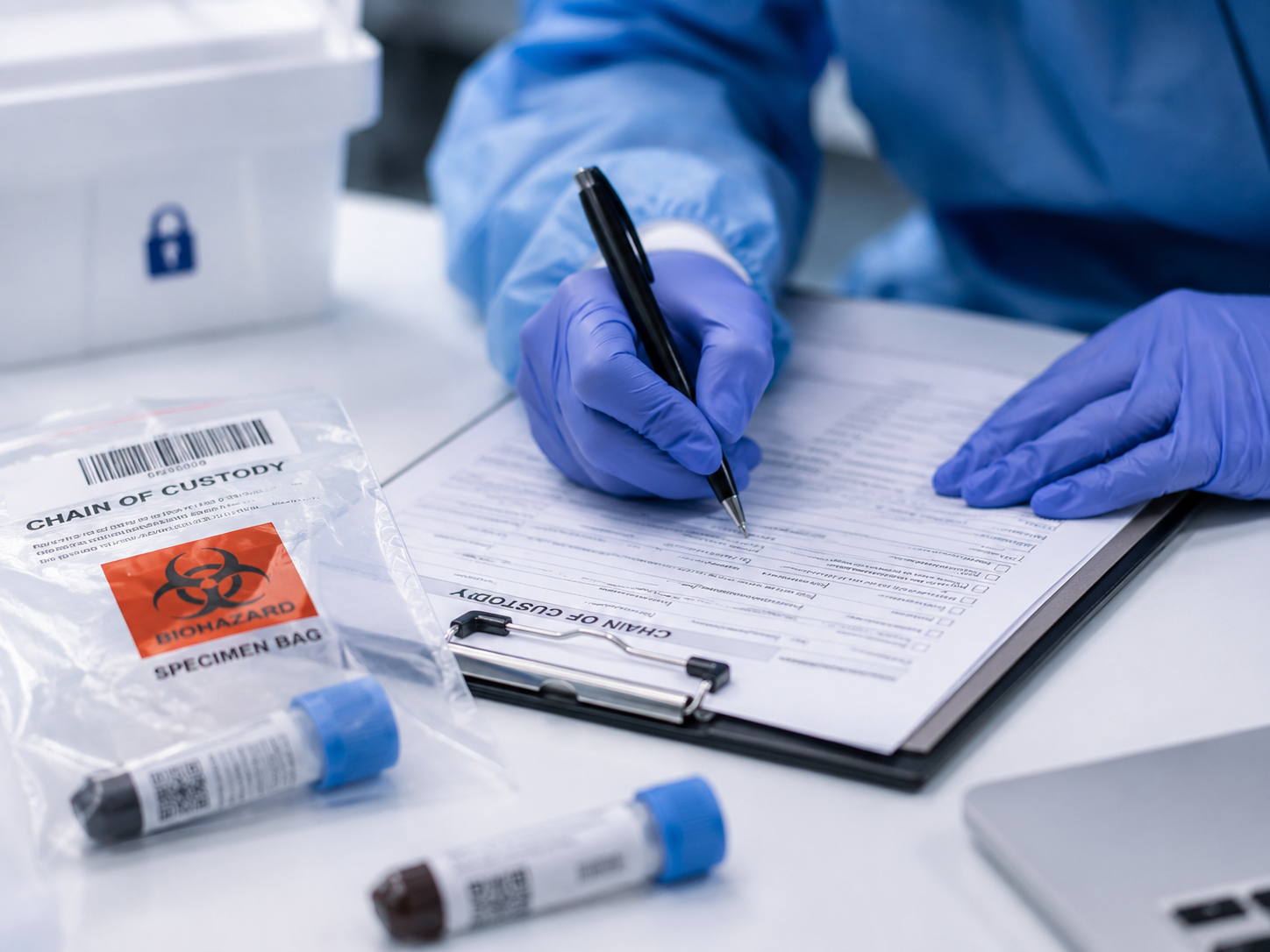
Practical Safety You Can Use Immediately
This course covers standard precautions, PPE, safe specimen handling, spill awareness, exposure prevention, and what to do if something goes wrong on the job.
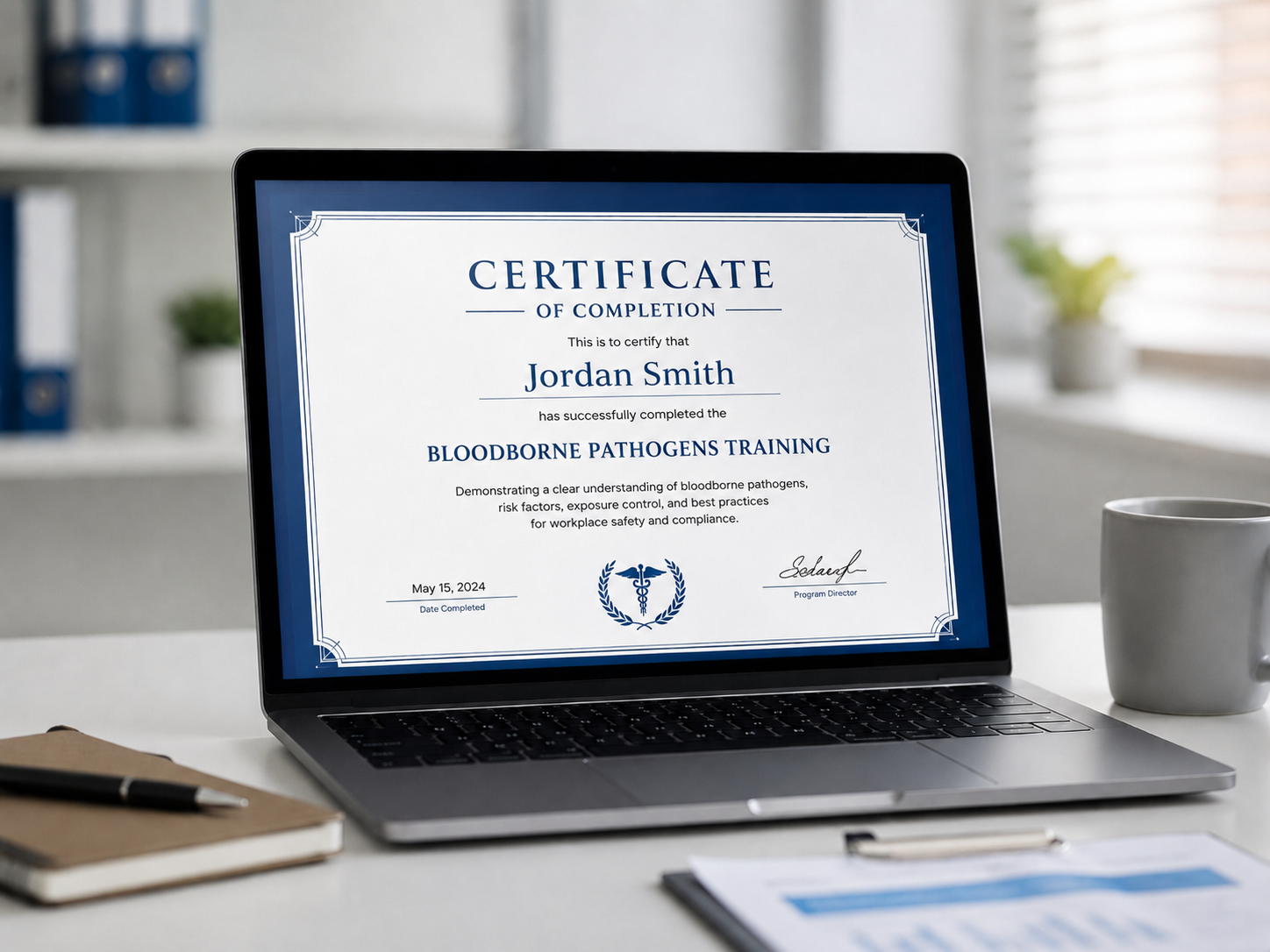
Earn Your Certificate of Completion
Pass the final quiz with an 80% score and receive a Certificate of Completion showing you completed Bloodborne Pathogens Training for Medical Couriers.
Why This Course Matters for Your Safety
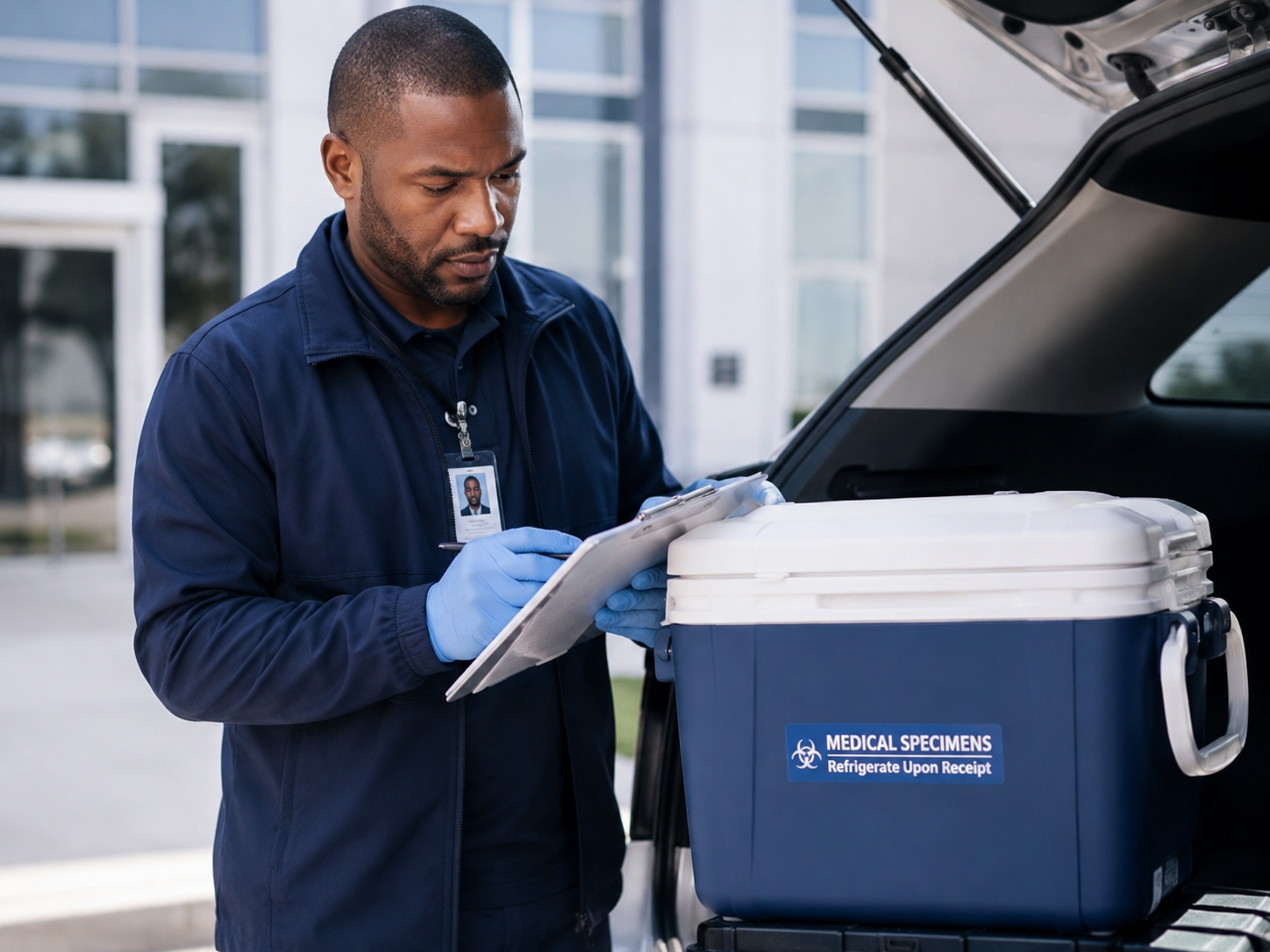
As a medical courier, driver, dispatcher, or logistics professional, you may encounter medical specimens, blood, bodily fluids, leaking containers, contaminated packaging, or other biohazard concerns during normal work. One small mistake can create a safety risk for you, your team, your client, and the public. This course gives you practical bloodborne pathogens training built around real medical courier scenarios. You’ll learn how to recognize exposure risks, use standard precautions, handle specimens safely, respond to spills or leaks, report incidents properly, and know what to do if something goes wrong. By the end, you’ll have the confidence to protect yourself and complete your work safely and professionally.
About This Course
This course was designed for medical couriers, drivers, dispatchers, and logistics staff who may come into contact with medical specimens, blood, bodily fluids, leaking containers, contaminated packaging, spills, or other biohazard concerns during normal work. The training is practical, straightforward, and built around real-world courier scenarios. You’ll learn how bloodborne pathogens may be present, how exposure can happen, how to use standard precautions, when PPE matters, how to handle specimens safely, and what steps to take if a spill, leak, or exposure incident occurs. Whether you are new to medical courier work or strengthening your safety knowledge, this course gives you the tools to protect yourself, your team, your clients, and anyone who may come into contact with the materials you transport.
What You'll Learn
-
1
-
(Included in full purchase)
Welcome and Course Overview
-
(Included in full purchase)
Bloodborne Pathogens Overview for Medical Couriers
-
(Included in full purchase)
Important Disclaimer
-
(Included in full purchase)
-
2
-
(Included in full purchase)
What Are Bloodborne Pathogens?
-
(Included in full purchase)
Blood, OPIM, and Contaminated Materials
-
(Included in full purchase)
How Exposure Can Happen in Courier Work
-
(Included in full purchase)
-
3
-
(Included in full purchase)
Safe Handling of Medical Specimens and Biohazard Materials
-
(Included in full purchase)
Chain of Custody, Spill Awareness, and Problem Reporting
-
(Included in full purchase)
Photos, Texts, Emails, and Safety Reporting
-
(Included in full purchase)
-
4
-
(Included in full purchase)
PPE, Hand Hygiene, and Cross-Contamination
-
(Included in full purchase)
Leaks, Spills, and Exposed Biohazard Materials
-
(Included in full purchase)
Exposure Incident Response and Reporting
-
(Included in full purchase)
-
5
-
(Included in full purchase)
Course Review and Final Quiz Instructions
-
(Included in full purchase)
Questions About This Training
-
(Included in full purchase)
Bloodborne Pathogens Final Quiz
-
(Included in full purchase)
Certificate of Completion Instructions
-
(Included in full purchase)
Complete Your Bloodborne Pathogens Training Today
Protect yourself, your team, your clients, and anyone who may come into contact with the materials you transport. Enroll now, complete the course, pass the final quiz with an 80% score, and earn your Certificate of Completion.
$34.99
Disclaimer
This course is provided for general bloodborne pathogens safety training and educational purposes only. It is not legal or medical advice and does not replace an employer’s Exposure Control Plan, OSHA-required training, client-specific procedures, workplace safety policies, medical evaluation requirements, or applicable federal, state, and local regulations.